Baahubali
Designing experiences around a film, then standing in front of the audience to see what they actually did with them.
How do you take a film beyond the screen?
A film campaign usually ends at the poster. This one had a website that behaved like a hub, a social feed running for years, a run of promotional films, a print and merchandise campaign, a tour of physical events, and a VR experience. All of it had to read as the same world.
Website
Social
Motion
Print
Events
VR
Baahubali.com
The site was not a press kit with a trailer on it. Its home screen is a wheel, an emblem in the middle and the franchise arranged around it: films, graphic novel, live action, novel trilogy, animated series, merchandise, mobile games and VR. You pick a world rather than read a menu.
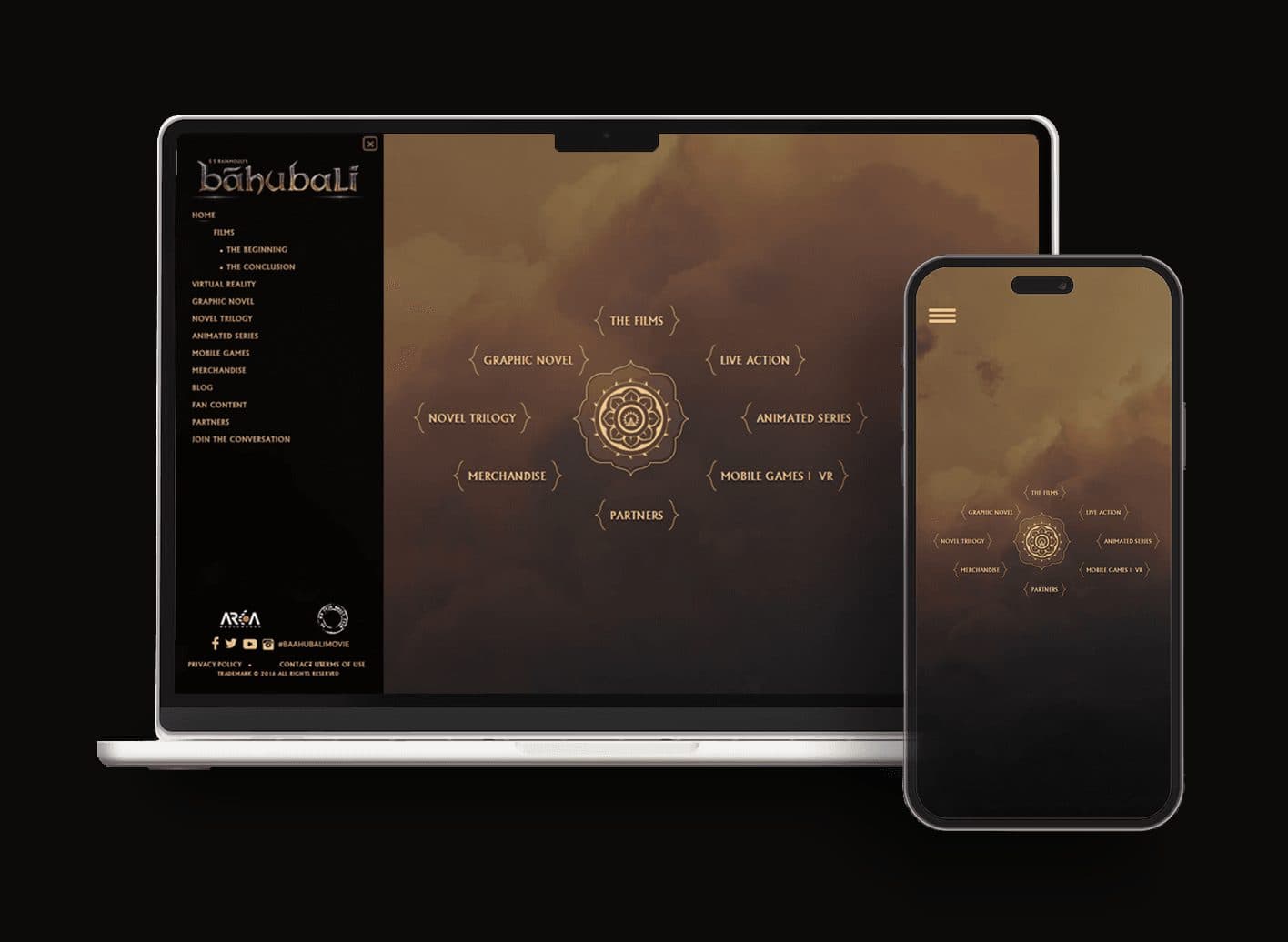
Discover
Arrive on the world itself, with every route out of it visible at once.
Explore
Each spoke is a place with its own story, preview and credits, not a page of copy.
Interact
Where a world had shipped something, the door said so and led straight to it.
Continue
The wheel is always one click away, so there is never a dead end.
A film, a game, a comic, a series. One door each.
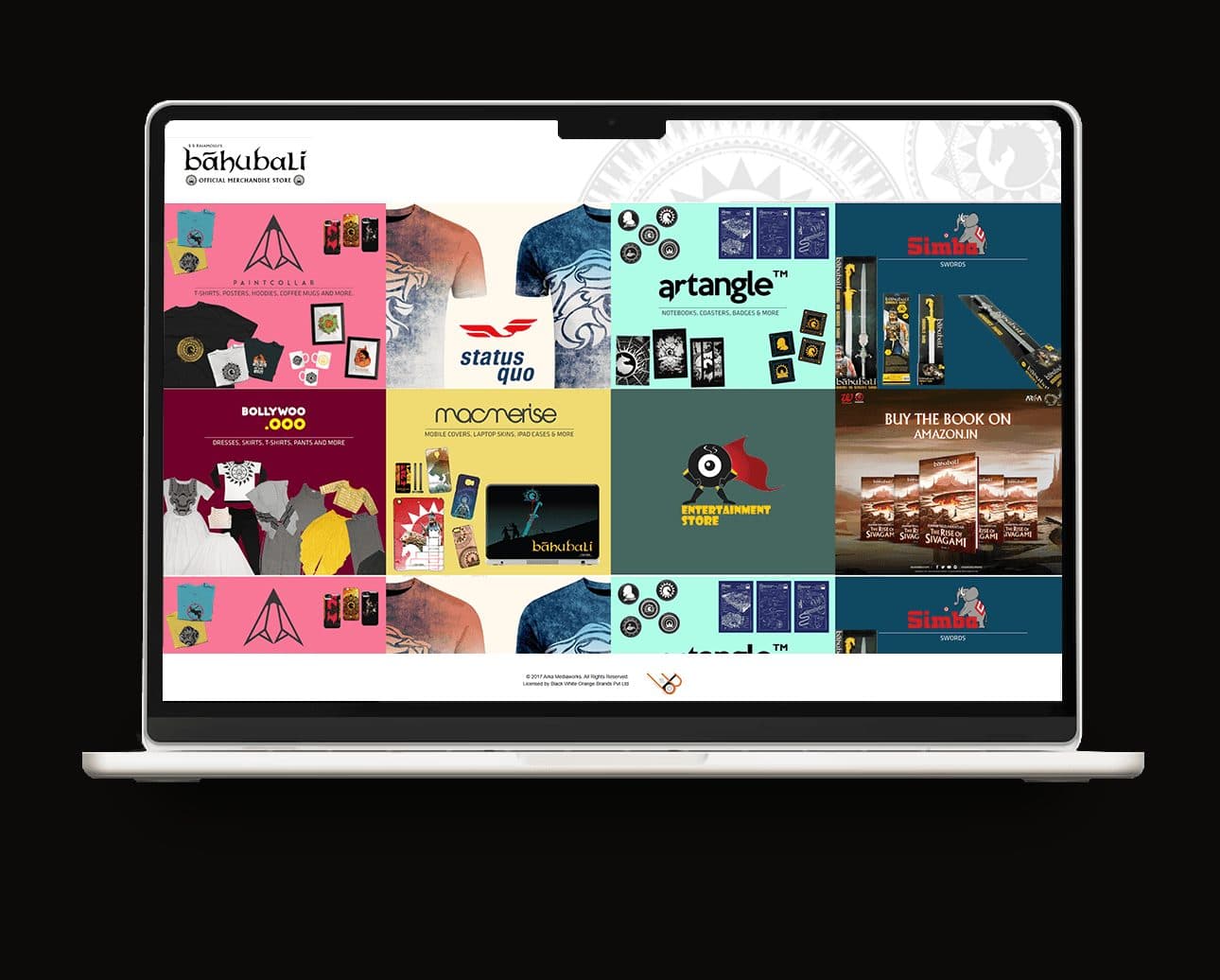
Each world got its own front door on the same site, built to the same rules: a full-bleed scene, the gold emblem set, and whatever that world had actually shipped. Same grammar, different room.
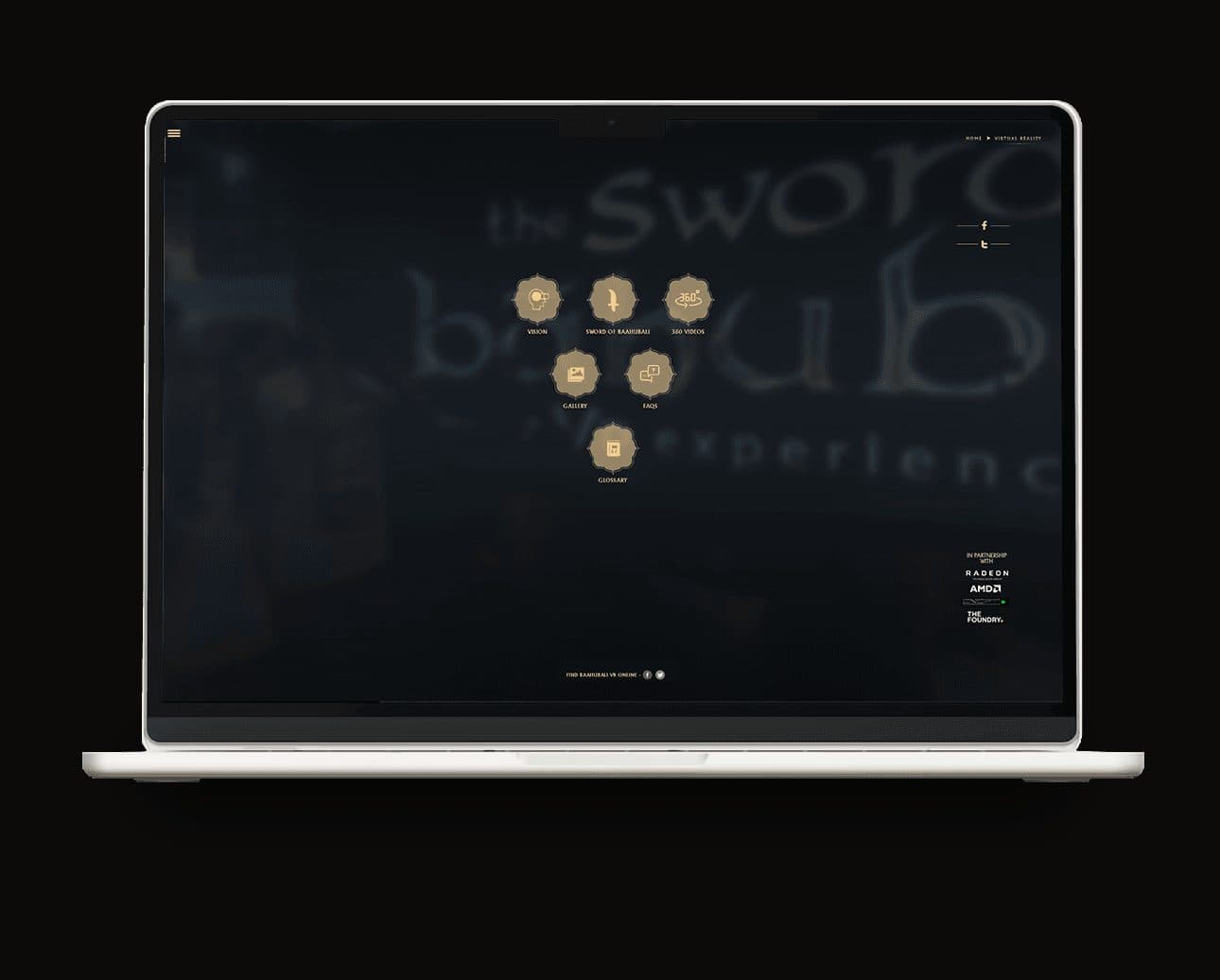
Virtual reality
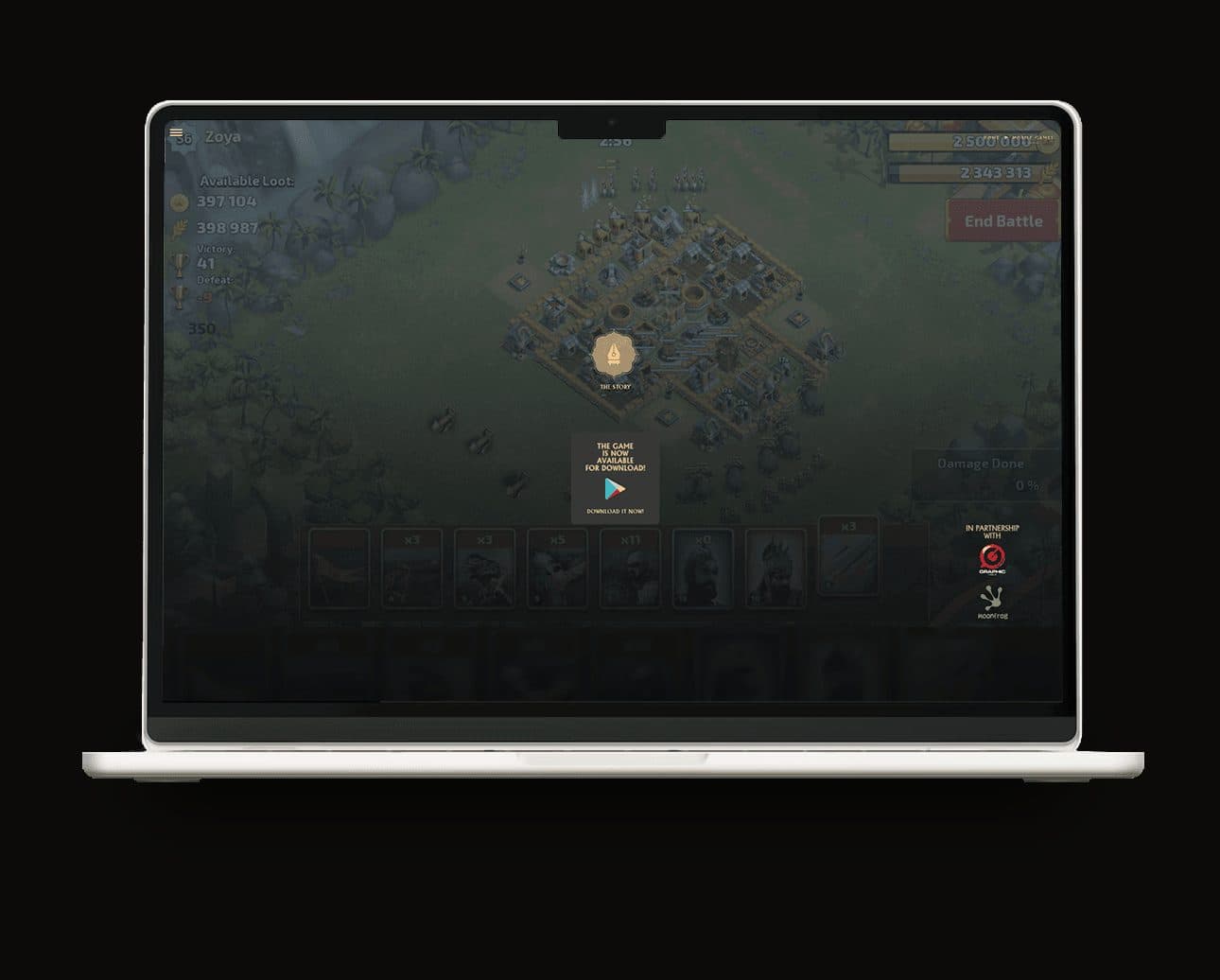
Mobile game
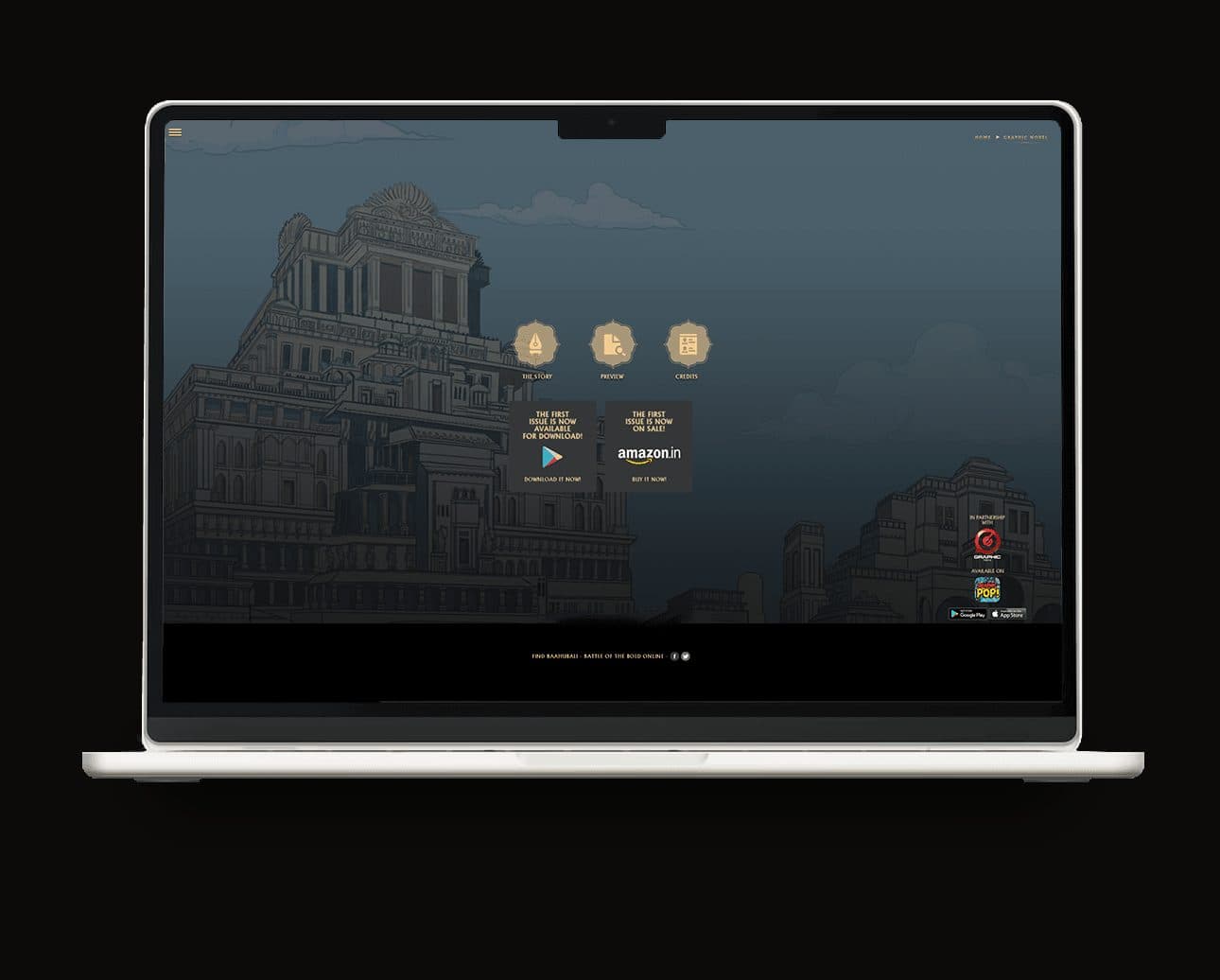
Graphic novel
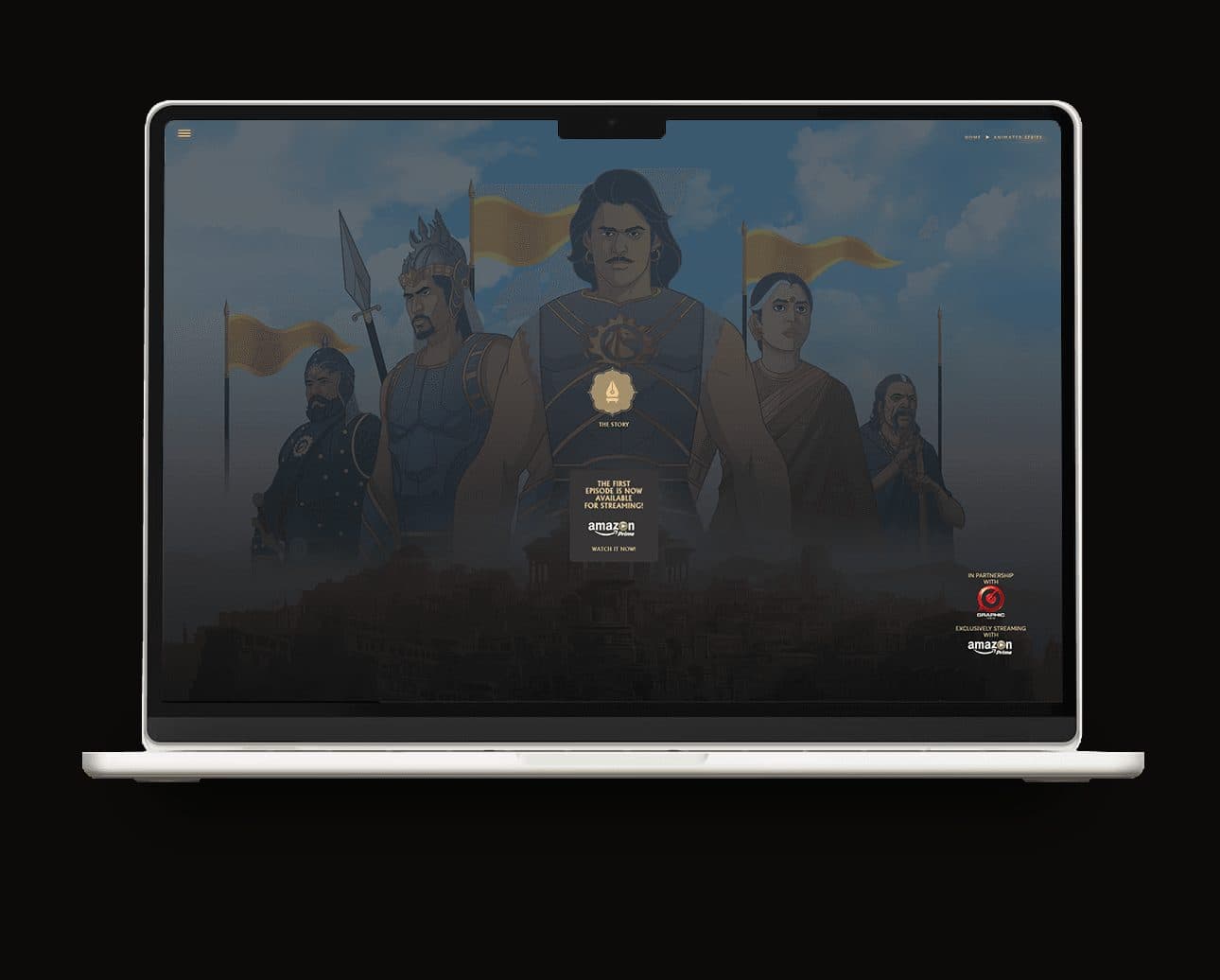
Animated series
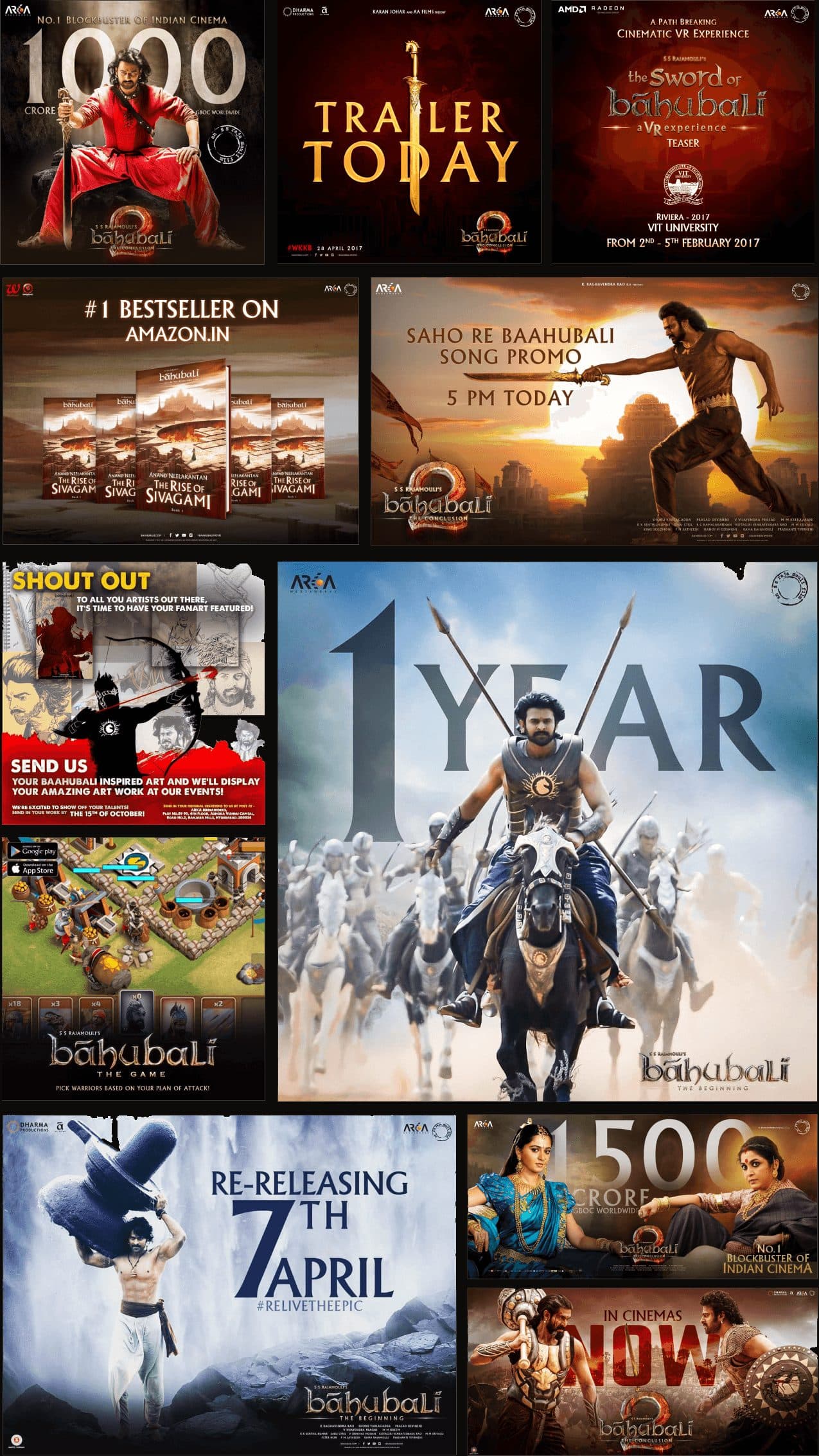
Every post was another doorway into the world.
Hundreds of designs over the run, to a style guide that was not up for negotiation. Each post had to work alone and still belong to the set: a release date, a milestone, a festival, a re-release, all in the same voice.
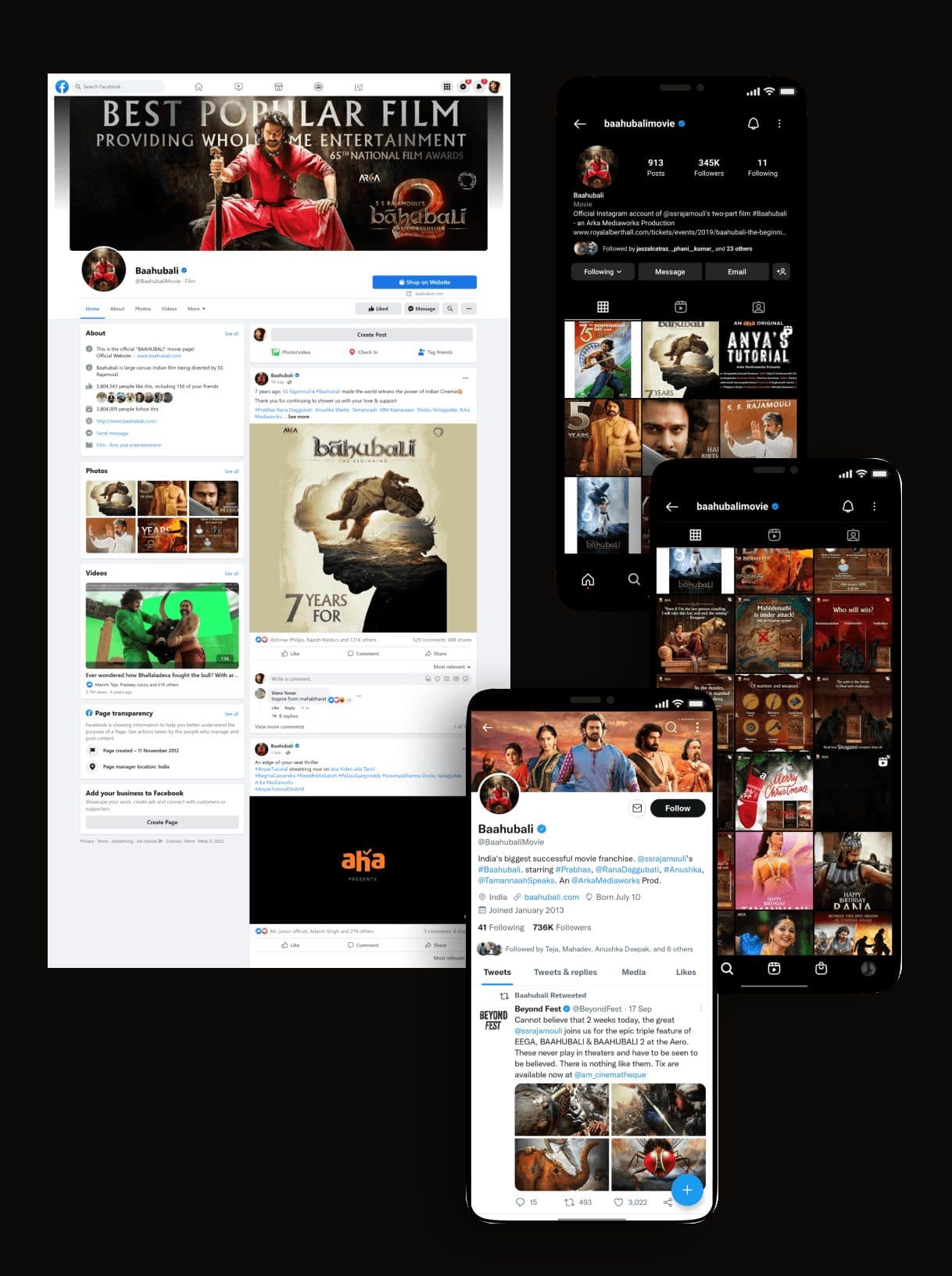
- 3.79M
- 1.53M
- 736K
- 344K
Figures documented in the original project, at the time. Franchise accounts, not attributable to any one designer.
What happens when the audience steps inside the film?
The Sword of Baahubali
- 10 min
- Cinematic VR
- Interactive
- 2017
Two friends find themselves on a battlefield. Watching the action unfold, they are unexpectedly asked to take part: to find a legendary warrior’s sword and deliver it to him.
Directed by S. S. Rajamouli with VR director John Griffith, produced by Shobu Yarlagadda and Prasad Devineni for Arka Mediaworks, with Radeon Technologies Group and CNCPT LA.
Tribeca Festival archiveI did not build it. I designed the part of it that lived on the web (the VR section of Baahubali.com) and then spent the festival season standing next to the headset, watching what people actually did with the experience.
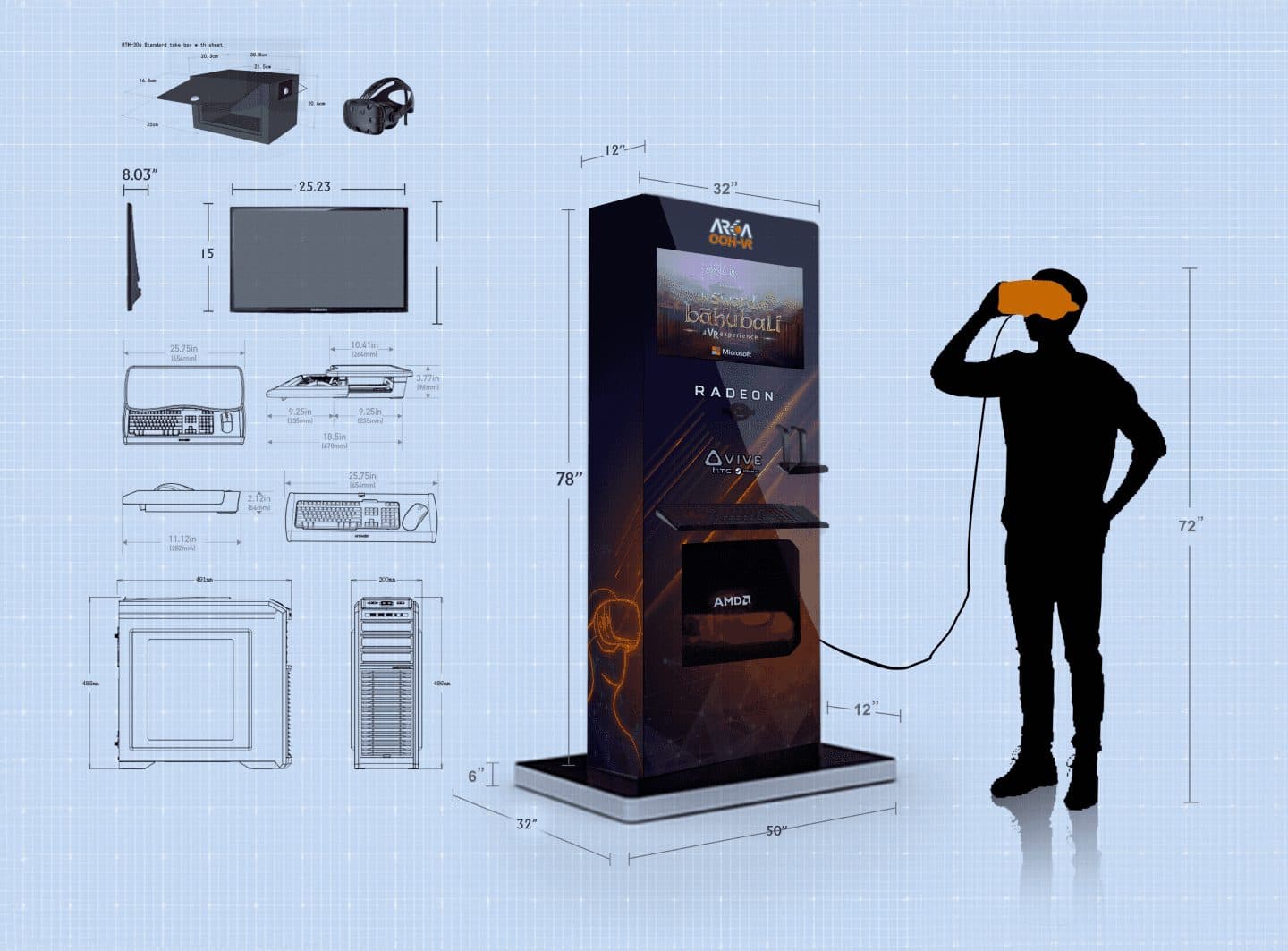
- Battlefield
- Mission
- Find the sword
- Make decisions
- Reach the next path
- Deliver the sword
The prototype met the audience before the final experience did.
A queue at a festival is a strange, useful test lab. Nobody is briefed, nobody is being paid, and the person behind them is waiting, so anything confusing shows up immediately and honestly. For most people in those queues this was the first headset they had ever worn, and thousands of them went through it.
Comic Con
MAMI
College fests
- Put on the headset
- Enter the experience
- Watch
- Interact
- React
- Capture feedback
- Share with the VR team
- Refine
Watching people told us things a screen couldn’t.
Reaction
What people did in the first seconds after the headset went on, and in the first seconds after it came off.
Confusion
Where they hesitated, looked the wrong way, or needed someone to tell them what to do.
Engagement
Which parts held attention and which parts people waited through.
Emotion
The moments that produced a visible reaction rather than a polite one.
Feedback
What they said unprompted once the headset was off.
- Audience
- Observe
- Collect
- VR team
None of this was a research programme with a protocol. It was standing next to the experience for days at a time, watching, asking, writing it down, and taking it back to the VR team so what they built next accounted for the person who had never worn a headset before.
Sometimes the experience isn’t visual.
Not every part of the world was something to look at. I worked on the Baahubali 2 audio experience, a piece where the design job was pacing, anticipation and restraint rather than composition.
The experience received positive feedback from S. S. Rajamouli and the team.
Before the experience starts, the world has to feel real.
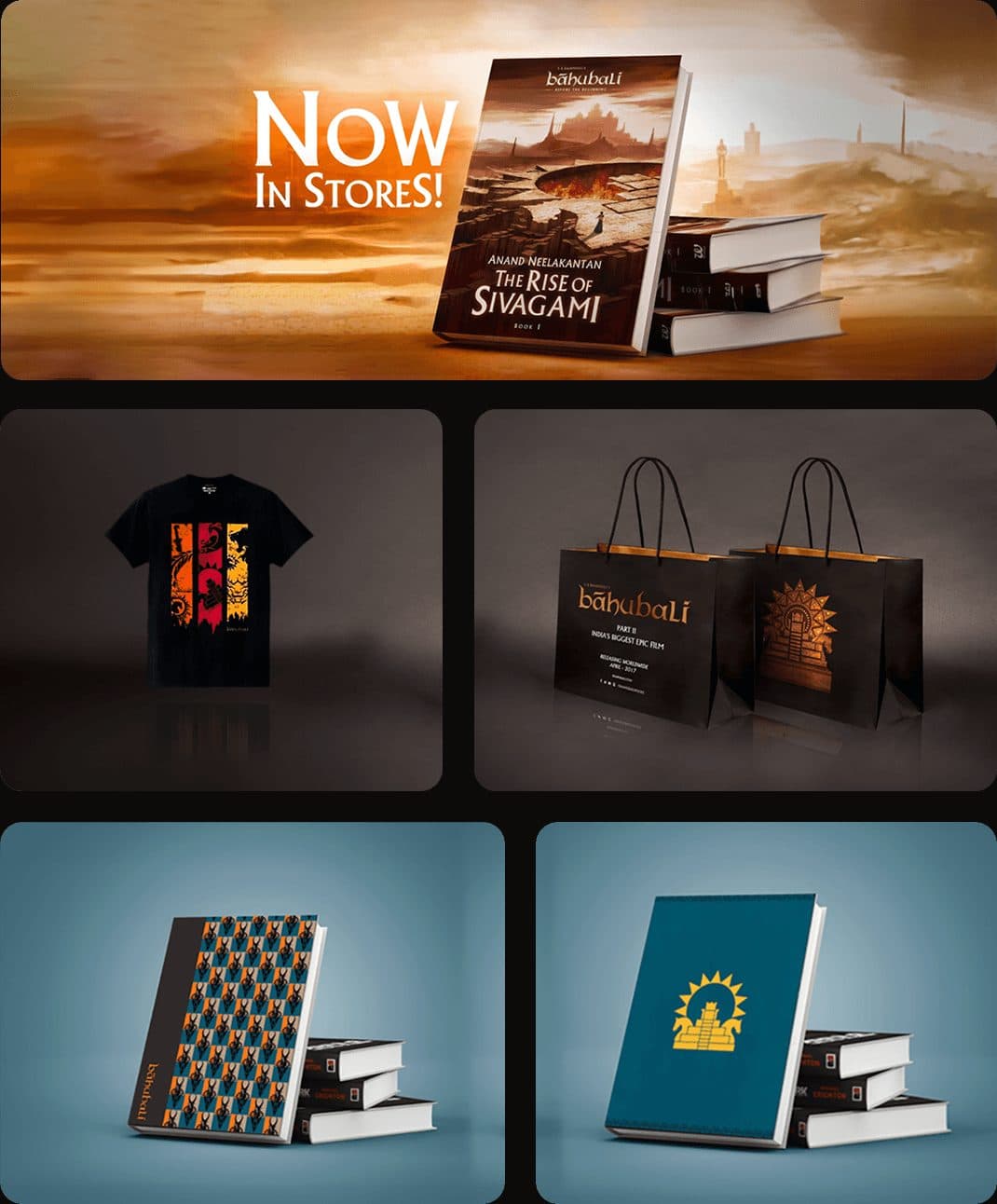
Trailers, motion posters, pre-release event films, print collateral and merchandise, made to a release calendar rather than a design calendar. It mattered because it was the first contact: the world had to look like it already existed before anyone would step into it.
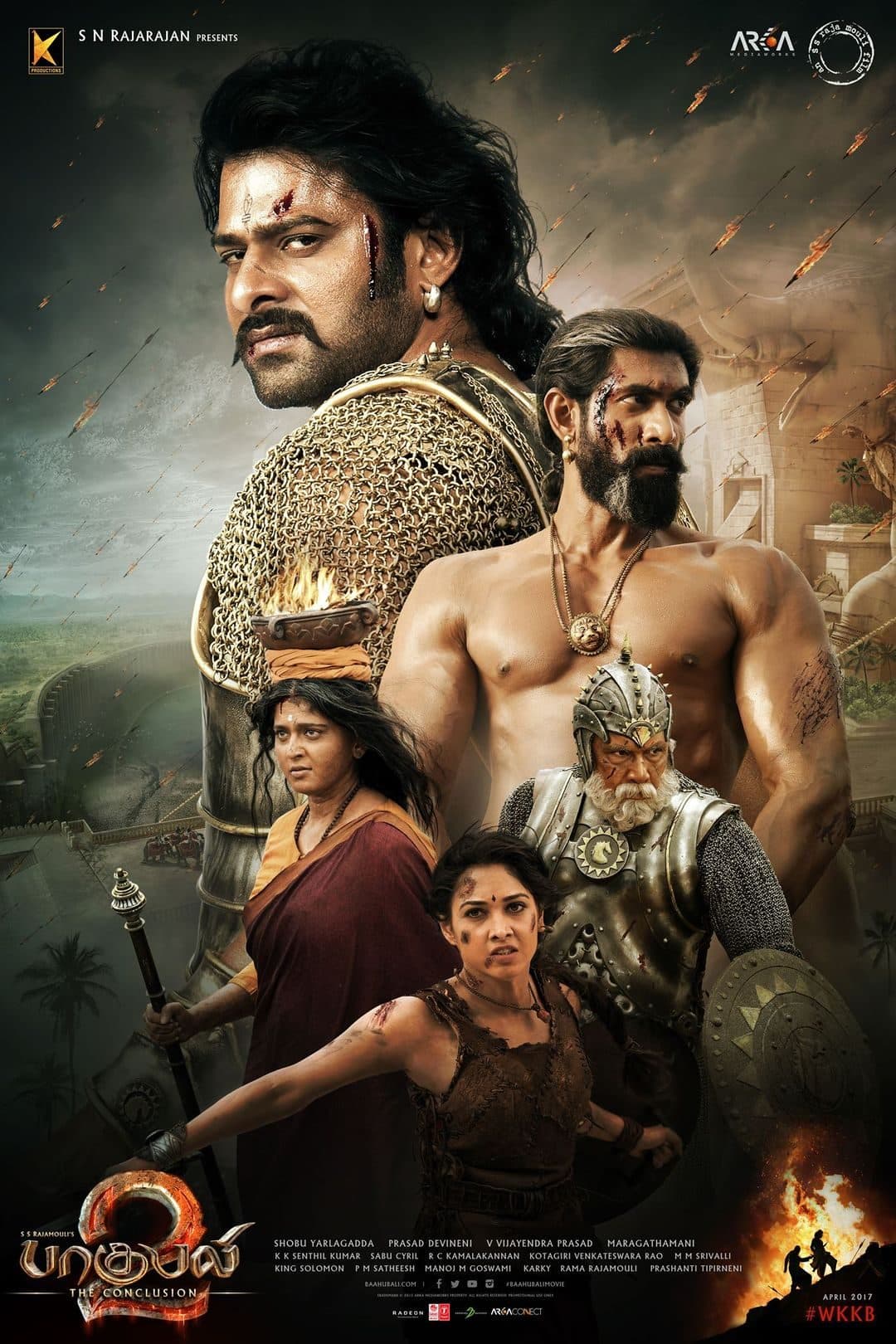
Pre-release event films, made with M. M. Keeravaani's score. Embedded from Vel Records. They are not rehosted here.
Producers AV: Shobu Yarlagadda and Prasad Devineni Sathyaraj as Kattappa AV Ramya Krishna as Sivagami AV M. M. Keeravaani AV
Every touchpoint had to feel like Baahubali.
- One world at the centre
- Baahubali.comWhere the world was documented
- SocialA doorway a day
- VideoTrailers, teasers, promos
- PostersPrint and campaign material
- EventsComic Con, MAMI, college fests
- VRThe Sword of Baahubali
- Audience
- Feedback
- Back into the world
The loop at the left is the part that mattered. Everything else radiates outward from the world; the audience is the only touchpoint that sends something back.
I worked wherever the experience needed to happen.
The title on the contract was Senior Visual Designer. What the job actually covered was wider, and the part I would keep is the part that had nothing to do with a screen.
UI / UX
Website and digital experience.
Visual design
Posters, social and campaign material.
Video
Trailers and promotional videos.
Experiential
Comic Con, MAMI and college activations.
Audience feedback
VR testing, reactions, and findings taken back to the VR team.
Collaboration
With the director, the producers and the production and creative teams.
Two group photographs from the campaign, posted publicly at the time.
The best digital experiences don’t stop at the screen.
Sometimes you put the headset on, stand in front of the audience, watch what happens, and take what you learn back into the product.
It is the same job as the other three. Someone arrives without the vocabulary the thing expects, and the design either closes that gap or leaves them holding it.